


From the moment we’re assigned our sex, society attaches a respective gender with a list of expected gender norms for us to fulfill.
Many people continue to use these two words interchangeably: sex and gender. However, these words take on radically different meanings. Sex is used to biologically distinguish people by their chromosomal makeup (XX and XY). Though, not to exclude various other conditions where these chromosomes aren’t as easily distinguished. On the other hand, gender is a socially constructed concept created within cultures that associates certain behaviors with certain genders. Many Western gender norms that I’m quite used to hearing are illustrated throughout the book Lords of Discipline by Pat Conroy.
The novel follows the story of Will McLean, a student at The Citadel, a highly prestigious military school. Once he arrives at the school during his first year, he automatically has his hair shaved. This became one of the most moving moments to me because of its immediate occurence and symbolic impact. The event effectively erased any sense of personality as one of their most identifiable characteristics were stripped from the students, and with the removal of their hair, came the removal of their identities.
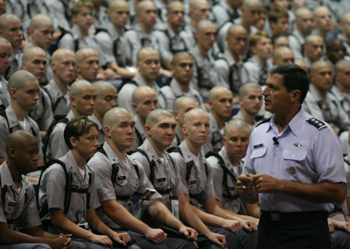
The General of the Citadel aims to justify all actions taken against the plebes by stating, “…The goal of the Institute is to produce the ‘Whole Man'” (Conroy 53). By the select choice in words spoken to McLean, it implies the existence of only one singular man for every single student to aim to be. Uncoincidentally, the Citadel’s concept of the ‘Whole Man’ is identical to the societal expectations of masculinity.
As someone living in the American South, I get to experience these forced gender roles almost daily. McLean, wisely, said, “Southerners posses a simple, yet magnificent obsession with all things military… and [they] hold fast to traditions that should have died centuries before” (conroy 176). Instead of developing beyond old notions of binary gender, the South has only slowly been required to outgrow and adapt their gender roles in response to laws passed (like the 19th amendment). Even in just small, normalized ways, these gender roles are continually enforced. While watching high school football games, I get to witness the young, impressionable boys being screamed at for not being “tough enough” to pummel the other players. In my own home, I get to see my brothers constantly needing to assert their physical superiority. I get to see boys in the hallway making fun of their other guy friends for crying. For showing emotion. For anything that would make them appear ‘less manly’.
Although, a significant portion of the book, thankfully, isn’t applicable to modern times, a worrying amount still is. One of the most troubling equivalences is the stigmatization of men who cry. Throughout the book, a very prominent theme is the mockery of men crying, or the normalcy of them not doing so.
“He told me to stop crying and act like a man” (Conroy 4).
“‘You fucking pussy’, he screamed into the boy’s ear. ‘I want to see you cry some more, you fucking pussy. Bawl, little baby. Bawl, you fucking cunt-eyed baby'” (Conroy 106).
“‘He’s crying, Matt. i think you’ve convinced him that you’re the big tough son of a bitch you think you are. can you see that he’s crying?’ ‘He’s a fucking pussy,’ Snipes said.” (Conroy 107)
“[My father] would have mocked the son who cried secretly into his pillow each night. My tears would have shamed him” (Conroy 175).
“We were moved by Mrs. Durrell’s tears; we were moved by [Mr. Durrell’s] lack of them” (Conroy 323).
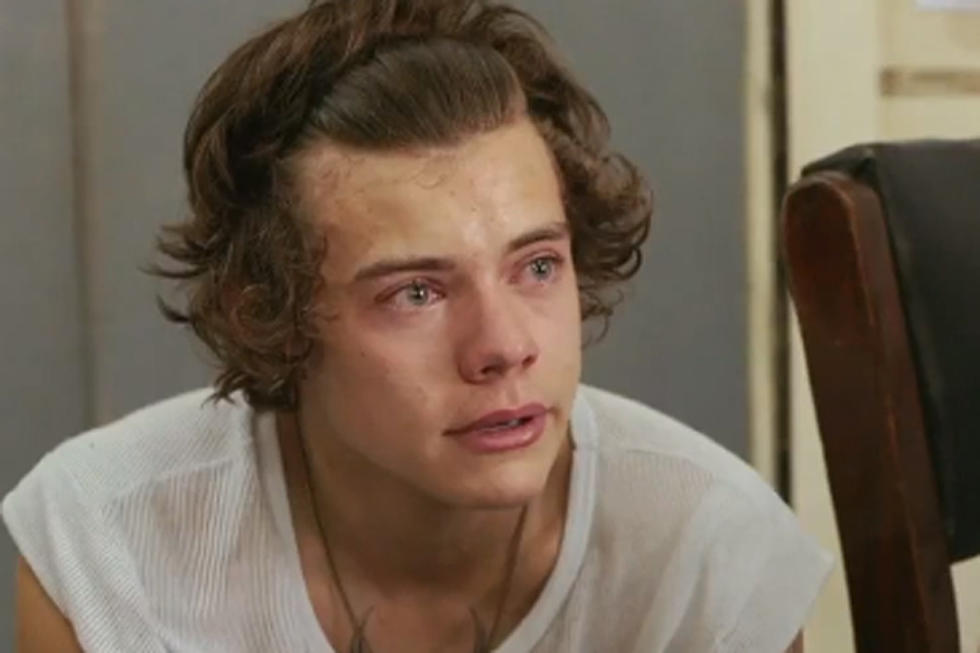
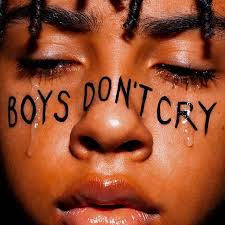
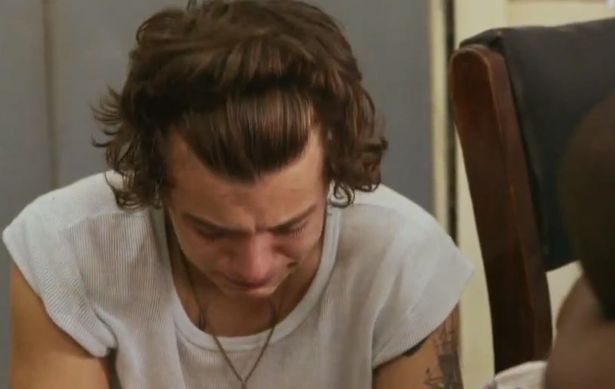
I, personally, have heard quite similar, if not identical, phrases repeated in my lifetime. Men seem to have a subconscious desire to be invulnerable because they see the emotional vulnerability in crying as being weak, which they give a negative connotation. Even in my family, my parents have told my brothers to “man up” and stop crying multiple times. Though, I’ve never been told to stop my crying and “be a woman”, because crying is seen as feminine.
Expressing emotions in a healthy way is seen as feminine.
However, a very ‘masculine’ way of expressing emotions is with rage. Of course, being angry is a completely normal reaction to have in plenty circumstances, but the issue in life comes from when every emotion turns into aggressive anger. We have seen this in very recent events with the incitement of an insurrection at the capitol when the U.S. (male) president was angry about losing reelection. Instead of being able to be disappointed, Donald Trump’s first reaction was to want revenge from alleged “voter fraud”. This resulted in a large group, coincidentally mostly made of men who referred to themselves as “Proud Boys”, that got angry with him and committed an act of domestic terrorism as a result of many channeled emotions into anger.

Beyond the issue of gender roles being assigned, there’s also the issue of people, men in particular, being ridiculed for not adhering to them. Men, specifically, are attacked for breaking gender roles because of the fact that if they are to break these, they’d have to stoop lower. Women, on the other hand, break gender roles by rising above. Therefore, men wearing dresses, makeup, or even liking other men is frowned upon much more than women wearing suits, no makeup, or liking girls (in fact, this is often hypersexualized as a result of the male gaze). This, depressingly, often restricts men from expressing themselves in any way they choose, while women often have the space to do so, relatively.
Not having the freedom of expression often results in men not being able to explore and develop their own personalities. McLean often felt the burdens of this at the Citadel. He illustrated this feeling when he stated, “I did not know the face of another classmate. They all looked the same to me, a race of bald, timorous zombies, chanting a debased, newly minted language in a country alive with cruelty… they looked too much like me, and their faces, like mine, were in pain” (conroy 155). McLean became unable to distinguish himself from his fellow classmates as a result of extensive efforts to create ‘Whole Men’. Although, society now is not as systematically adamant on gender expectations, men are still told their entire life how they are supposed to behave with little room for personal growth. Therefore, men, for the most part, behave based on societal expectations of them, which can lead to an identity crisis where men have the incessant need to constantly ask themselves: “do you know who you are?”.
 caro's blogs