human sciences blog

“The possession of knowledge carries an ethical responsibility.”

Although ‘knowledge’ can be defined as various things in relation to different subjects, the human and natural sciences will be the main focus of this blog. When considering knowledge in terms of the human sciences, the first thing my mind went to was the knowledge of mental illness and the psychology behind it.

Psychology is one of the biggest branches of the human sciences and focuses on studying the human mind and how it functions. Like many other human sciences, this field was not always as well-developed or supported. For many people with mental health in the past, this created a disturbing amount of torturous methods for treating their ‘problem’.

Before the idea of ‘mental health’ had existed, there was no coined term towards people who had atypical brain chemistry, resulting in abnormal behaviors. Despite the lack of a psychologically correct term, there were other words used towards people who were believed to have had mental disorders: possessed, bewitched, demonic, etc. A few historic treatments of people accused of being these terms are lobotomies, shock therapy, and malnutrition.

Although modern medicine makes these forms of ‘treatment’ look arbitrary, the lack of research and answers to what causes these abnormal behaviors in their ‘patients’ was what led to their creation. If more ‘doctors’ in this time had the knowledge of brain chemistry and mental illnesses, they wouldn’t have been so fast to have sent them to priests for exorcisms. Therefore, when German psychiatrist, Emil Kräpelin, finished his comprehensive research on psychological disorders, he published the information that contained symptoms in order to better treat people who presented the behaviors he described.

This real-world example of knowledge on mental illness proves the validity of the statement, “the possession of knowledge carries an ethical responsibility’, because if Kräpelin and many other researches in the psychology field had withheld information on treatments and origin of mental disorders, there would still be present cruel and inhuman methods of treatments for these illnesses. Therefore, the ethical responsibility is derived from the fact that spreading that knowledge would prevent the unsuccessful and harmful processes these people with mental illnesses had to endure for hundreds of years.

Moreover, Milgram’s Study of Obedience presents an interesting situation in which to consider this statement as well. By sitting through a discussion on the ethics of not telling the people in the study that they weren’t truly harming the people they believed to be shocking, it produced the question of whether all knowledge should be sought after, despite the ethical dilemmas. The people being experimented on were subject to PTSD and other forms of trauma as a result of this experiment, though if they were told that they weren’t truly harming anyone, it would make the results of the experiment useless.

Personally, I’m not sure whether I agree or support the methods used in this experiment, however I do believe that it proves the assertion that possession of knowledge contains an ethical responsibility. The scientists experimenting on the subjects had the knowledge that they weren’t actually shocking other humans, therefore it became their ethical responsibility to make their subjects aware of that if they wanted to prevent any long-term trauma that could’ve been derived from this experiment. Whether or not they should’ve acted on this responsibility is not something I have an opinion on, though the responsibility still fell on those scientists with that knowledge.

The natural sciences is another area of knowledge that I can easily make connections with this statement to in relation to medicine, more specifically vaccines.

In general, medicine is something that contains the ethical responsibility of sharing knowledge on if possessed in a similar way to that of mental health. A specific example of this would be the recently developed covid vaccines. During the time where there wasn’t an existing vaccine to this virus, millions of people died. Therefore, a vaccine being created was important enough to where millions of dollars in research was put into finding one. When one was found (or multiple ones), it became the scientist’s ethical responsibility to share their knowledge of the vaccine with people to prevent the deaths of millions more.

These examples only pertain to two areas of knowledge, natural and human sciences, however the statement that the possession of knowledge carries an ethical responsibility can be applied to any area of knowledge, due to the fact that all knowledge has the power of progressing society and when someone obtains a new piece of knowledge, they then carry that ethical responsibility to do something with it.

Tofu Noodle Bowl

While I was in Florida to visit family, my family decided to eat out at a Mexican restaurant. I don’t like Mexican food at the best of times, but this particular one had no vegetarian options for me to eat. My father told me I could take his credit card and eat at another restaurant close by. The nearest restaurant that looked good was a local Thai restaurant. I couldn’t find a menu for this restaurant online so I decided to just go inside the building and see what they had.

When I walked into the restaurant, it was a lot smaller inside than I had prepared for, making the experience much more anxiety inducing, especially considering the fact that I was in a foreign place. I looked on the menu and didn’t see any vegetarian options, however I saw they had tofu on other meal options so I figured I could ask to get tofu to replace the chicken on another otherwise vegetarian meal. This plan worked out and the workers were very nice about making this change.

The meal I got was definitely the best tofu I have ever eaten and the meal was a top favorite as well. I’m so glad I was able to eat at this restaurant and took a chance on a place I was unfamiliar with. I was also grateful that I managed to ask for tofu and put myself out there in order to receive this meal.

In addition to me benefiting from this restaurant by getting an extremely good meal from it, I also was glad to be able to help and support a small business in the process. A handful of my blogs already express my feelings about the importance of doing this, not to mention my blogs expressing anti-capitalist rants. Although my parents also were eating at a small business, it was of value to me to do this as well. While there were numerous chain restaurants nearby that I wouldn’t have minded at, I took a chance with eating at a place I didn’t know and was rewarded greatly.

Displaced Deities

Science Vs Religion by Onytgvx on DeviantArt

The evolution from religion to science is illuminated throughout the article “Displaced Deities, a reply.” The author, Barbara Ehrenreich, establishes a connection between religion and science as ways of explaining the natural processes of the world. It accomplishes this by providing a historical timeline of the ways in which humans had previously explained various concepts. In addition, Ehrenreich also explains the evolutionary aspects of religion that have taken place, whilst comparing and explaining the distinguishing characteristics of each one.

The natural progression of religion is not portrayed in a manner where religions were aiming to overpower and vanquish others. On the contrary, those less capable of sufficiently answering the questions nature raises began evolving and taking on different forms. Eventually, the use of inductive reasoning to derive theories contributed to the creation of science and the scientific method.

One of the ideas expressed in this article is that Science was not created as a means to tackle religion. Ehrenreich states, “science did not set out to destroy the monotheistic deity, but it did push him into a corner and ultimately rendered him irrelevant” (2). This point stood out to me because of the controversial characteristics of it. The impact of using “irrelevant” to describe the monotheistic deity is a bold, yet agreeable choice. However, there are still a significant number of people who still identify with an organized religion, worshiping a monotheistic deity in this day and age, so long after the idea of science has been invented.

This produces the question of why? Why is it that so many people continue worshiping deities after they have been rendered unable to answer our questions?

Religion has been a significant part of world history: being the cause of many wars, witch trials, and holocausts. Although religion has done it’s share of harm, it has also provided many people with a community. The idea of community in religion is also peculiar because of the lack of such an extent of this feeling in any scientific field of study.

Unquestionably, religion has in it established expectations of community and trust. Ideas of love and care and family. In fact, according to the Christian religion, everyone on Earth are brothers and sisters of their God. Conversely, religion also has intrinsic fear, specifically that of dissent. The balance of these two makes the process of religion disappearing that of a prolonged one.

The notion of abandoning one’s religion is often a long and scary process because of what they’re taught while they were in it. For instance, most religions contain a ‘place’ souls go to when they die where they reach paradise. For example, Nirvana in the Hindu religion. This is the end goal of people worshiping the religions. This conception was created as the explanation for where humans go when they die, arguably contributed to by the natural fear of death. When humans learn that there is a potential ‘paradise’ awaiting them after death, this encourages them to do what is necessary to reach it. On the other hand, when science tells them this isn’t the case and Nirvana, in terms of science, doesn’t exist, the necessity to overcome the fear of death as well as the potential of going to Naraka makes it an extraordinarily difficult topic.

Because of the fact that science does not permit these personal connections, it rarely takes on the loitering form that religion does. For example, when the heliocentric theory was proven wrong, Kepler’s laws of planetary motion took over with little to no backlash or hesitation. Although both religion and science come from the desire to understand the Earth, religion relies on spirituality, while science relies on observable truth of the natural world. Therefore, these aspects of religion are the reasons for which it seems to so persistently linger, despite the emergence of science as a replacement.

Math Essay

“Knowledge is nothing more than the systematic organisation of facts.” In order to make a claim on the truth of this statement, one must first delve into what the statement is saying. The use of the phrase, “nothing more than”, creates a problem for agreement. The phrase is able to add a sense of authority, but results in a condescending tone towards knowledge. The statement would be made improved if the phrase were to be replaced with something that continues to enforce the idea that knowledge is only the systematic organization of facts without using the words “nothing more”, as that implies that knowledge can possibly be something else, but that it would be considered less. Therefore, while it is a patronizing phrase, it lacks the certainty it ought to contain. Another part of the statement that raises a question is the word ‘knowledge’. The definition of this word is the subject of numerous philosophical debates, however the TOK course definition, a justified, true belief, will be used for the purpose of this writing.

In the mathematics area of knowledge, this statement is far easier to prove truthful. Math is typically ingested meticulously organized by the teacher, but it is also further organized by the student in a way that allows the learner to best understand what they are taught. The formulas, theorems, and measurements are all compartmentalized in ways easily comprehensible by students in attempt to get them to best understand and gain knowledge on the topic. Additionally, the students must organize what they learn in order to understand which formulas work for which problems. Once they are able to connect these ideas and organize them correctly, the will have gained knowledge on the area of math. On the other hand, when students fail to correctly organize what they’re taught, they aren’t able to understand problems, derive solutions, or comprehend the math they’re learning about.

Another area of knowledge that can be used to prove this statement is history. Historians collect evidence from the past in attempt to correctly organize events for humanity to gain knowledge on our history. The facts they are presented are given meaning when people are able to piece together the information they already know to construct a possible story that accurately depicts a possible timeline of events. Therefore, resulting in new knowledge that we are able to learn about and learn from.

Ethics is an area of knowledge that makes this statement more arguable than others. In this area, knowledge is often derived from people’s opinions and feelings. However, opinions and feelings are just as much facts as artifacts discovered by historians or algorithms derived by mathematicians are. Facts are anything considered to be true. Therefore when people’s opinions, which are true to themselves, are organized into justifications for varying ethical decisions, this means they organized facts to create ethical knowledge for that individual. Knowledge won’t be the same for every person, but it continues to be a true, justified belief to the person holding it, allowing them to have an understanding of a topic, whether it differs from others or not. Differences in knowledge in this subject is the result of differences in experiences. Some people will encounter situations that present facts that are drastically different than what others are presented with. Infants are not born with a stance on the morality of murder, however a child raised on a battlefield will come to view it differently than one raised in the suburbs.

In areas of knowledge like math, there won’t be as many different understandings, however there are always different methods used to derive an answer. Students’ brains organize the facts they are given in different ways, which allows for them to take different forks in the road to reach an answer. Although, Bayes theorem illustrates how personal beliefs and experiences can be used in math as facts to result in knowledge. The theorem uses an equation that contains prior probability to utilize experiences and feelings to produce potential knowledge. They use their feelings as facts, further proving the ability to create knowledge by doing so.

In conclusion, I agree with the initial statement basis, however if I were to construct this claim, I would remove the phrase, “nothing more than”, as it added nothings substantial to the assertion besides a condescending tone.

do you know who you are?

From the moment we’re assigned our sex, society attaches a respective gender with a list of expected gender norms for us to fulfill.

Many people continue to use these two words interchangeably: sex and gender. However, these words take on radically different meanings. Sex is used to biologically distinguish people by their chromosomal makeup (XX and XY). Though, not to exclude various other conditions where these chromosomes aren’t as easily distinguished. On the other hand, gender is a socially constructed concept created within cultures that associates certain behaviors with certain genders. Many Western gender norms that I’m quite used to hearing are illustrated throughout the book Lords of Discipline by Pat Conroy.

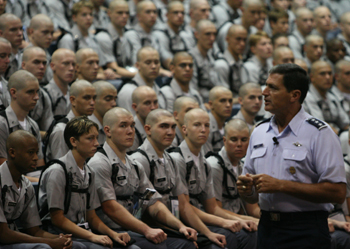
The novel follows the story of Will McLean, a student at The Citadel, a highly prestigious military school. Once he arrives at the school during his first year, he automatically has his hair shaved. This became one of the most moving moments to me because of its immediate occurence and symbolic impact. The event effectively erased any sense of personality as one of their most identifiable characteristics were stripped from the students, and with the removal of their hair, came the removal of their identities.

Citadel Class of 2011 (from Citadel’s website)

The General of the Citadel aims to justify all actions taken against the plebes by stating, “…The goal of the Institute is to produce the ‘Whole Man'” (Conroy 53). By the select choice in words spoken to McLean, it implies the existence of only one singular man for every single student to aim to be. Uncoincidentally, the Citadel’s concept of the ‘Whole Man’ is identical to the societal expectations of masculinity.

As someone living in the American South, I get to experience these forced gender roles almost daily. McLean, wisely, said, “Southerners posses a simple, yet magnificent obsession with all things military… and [they] hold fast to traditions that should have died centuries before” (conroy 176). Instead of developing beyond old notions of binary gender, the South has only slowly been required to outgrow and adapt their gender roles in response to laws passed (like the 19th amendment). Even in just small, normalized ways, these gender roles are continually enforced. While watching high school football games, I get to witness the young, impressionable boys being screamed at for not being “tough enough” to pummel the other players. In my own home, I get to see my brothers constantly needing to assert their physical superiority. I get to see boys in the hallway making fun of their other guy friends for crying. For showing emotion. For anything that would make them appear ‘less manly’.

Although, a significant portion of the book, thankfully, isn’t applicable to modern times, a worrying amount still is. One of the most troubling equivalences is the stigmatization of men who cry. Throughout the book, a very prominent theme is the mockery of men crying, or the normalcy of them not doing so.

“He told me to stop crying and act like a man” (Conroy 4).

“‘You fucking pussy’, he screamed into the boy’s ear. ‘I want to see you cry some more, you fucking pussy. Bawl, little baby. Bawl, you fucking cunt-eyed baby'” (Conroy 106).

“‘He’s crying, Matt. i think you’ve convinced him that you’re the big tough son of a bitch you think you are. can you see that he’s crying?’ ‘He’s a fucking pussy,’ Snipes said.” (Conroy 107)

“[My father] would have mocked the son who cried secretly into his pillow each night. My tears would have shamed him” (Conroy 175).

“We were moved by Mrs. Durrell’s tears; we were moved by [Mr. Durrell’s] lack of them” (Conroy 323).

I, personally, have heard quite similar, if not identical, phrases repeated in my lifetime. Men seem to have a subconscious desire to be invulnerable because they see the emotional vulnerability in crying as being weak, which they give a negative connotation. Even in my family, my parents have told my brothers to “man up” and stop crying multiple times. Though, I’ve never been told to stop my crying and “be a woman”, because crying is seen as feminine.

Expressing emotions in a healthy way is seen as feminine.

However, a very ‘masculine’ way of expressing emotions is with rage. Of course, being angry is a completely normal reaction to have in plenty circumstances, but the issue in life comes from when every emotion turns into aggressive anger. We have seen this in very recent events with the incitement of an insurrection at the capitol when the U.S. (male) president was angry about losing reelection. Instead of being able to be disappointed, Donald Trump’s first reaction was to want revenge from alleged “voter fraud”. This resulted in a large group, coincidentally mostly made of men who referred to themselves as “Proud Boys”, that got angry with him and committed an act of domestic terrorism as a result of many channeled emotions into anger.

Not a woman in sight..

Beyond the issue of gender roles being assigned, there’s also the issue of people, men in particular, being ridiculed for not adhering to them. Men, specifically, are attacked for breaking gender roles because of the fact that if they are to break these, they’d have to stoop lower. Women, on the other hand, break gender roles by rising above. Therefore, men wearing dresses, makeup, or even liking other men is frowned upon much more than women wearing suits, no makeup, or liking girls (in fact, this is often hypersexualized as a result of the male gaze). This, depressingly, often restricts men from expressing themselves in any way they choose, while women often have the space to do so, relatively.

Not having the freedom of expression often results in men not being able to explore and develop their own personalities. McLean often felt the burdens of this at the Citadel. He illustrated this feeling when he stated, “I did not know the face of another classmate. They all looked the same to me, a race of bald, timorous zombies, chanting a debased, newly minted language in a country alive with cruelty… they looked too much like me, and their faces, like mine, were in pain” (conroy 155). McLean became unable to distinguish himself from his fellow classmates as a result of extensive efforts to create ‘Whole Men’. Although, society now is not as systematically adamant on gender expectations, men are still told their entire life how they are supposed to behave with little room for personal growth. Therefore, men, for the most part, behave based on societal expectations of them, which can lead to an identity crisis where men have the incessant need to constantly ask themselves: “do you know who you are?”.

EEUU vs. Mexico

En Los Estados Unidos, hay muchas tradiciones con el día de navidad. Pero hay muchas otras tradiciones en otros países, como México.

Christmas Traditions Worldwide - Germany, Mexico & France - HISTORY

Por ejemplo, en los Estados Unidos, tienen una idea de ‘santa claus’. Santa Claus es un hombre que da regalos a niños. El hombre da regalos por la chimenea. El tiene un trineo y renos que él monta en a las casas de todas personas.

Santa On The Rooftop - YouTube

Santa Claus es un hombre gordo y viejo que tiene una barba blanca. A él le gustan las galletas y la leche (la razón por la que él es gordo). Además, él usa un traje rojo con botas negras.

How to Draw Santa Claus · Art Projects for Kids

Pero en México, no hay idea de ‘santa claus’. En esta celebración, hay Reyes Magos y ellos tienen regalos para los niños y niñas que se han portado bien. Entonces, es una idea similar pero no es la misma.

Reyes Magos with Kids (SVG Cut file) by Creative Fabrica Crafts · Creative  Fabrica

En México, los niños ponen sus zapatos debajo del árbol de navidad. Los zapatos tienen sus cartas que los niños escriben los regalos que quieran para la navidad en.

Nuestros zapatos nuevos de Pisamonas colocados en el árbol | Mi cesta de  mimbre

En Los Estados Unidos, normalmente, hay una gran cena para muchas familias. No creo que la cena tenga una ‘típica’ comida porque es diferente para diferentes familias, pero hay muchos dulces siempre.

5 Easy, Healthy and Festive Christmas Dinner Ideas

En México, la comida típica para esta celebración es el pavo, el cerdo, el pollo, el filete de res, y el pescado seco. Un muy común beber es un ponche mexicano que tiene muchas frutas y agua.

HSHQ on Twitter: "Harry Styles // Live On Tour Night 36 // Mexico City, MX  1/2 01.06.18… "

Hay muchas diferencias en los celebraciones, pero en los dos países, los niños tienen regalos de una cosa o idea que no es real o visible. En los Estados Unidos, hay santa claus y en México, hay tres Reyes Magos. Además, en los dos países, hay una gran cena pero personas de los Estados Unidos normalmente tienen jamón y personas de México normalmente tienen tamales.

Treating People With Kindness

This week is Thanksgiving week. For Thanksgiving, my whole family normally comes over. We typically all cook, or my mom typically cooks, one really huge meal for all of us, as most families do. However, my family is composed of 10 people, not including in-laws, nephews, or nieces. Therefore, our meal is bigger than the typical home’s Thanksgiving dinner. This allows us to recognize the privilege of being able to afford a Thanksgiving dinner and feed/provide for the people in your family. This encouraged my mom, my sister, and I to all cook some dessert dishes for our neighbors.

We all cooked various pies and cakes for a few of our neighbors, which added multiple hours to our already lengthy Thanksgiving dinner preparation, but this hard work was arguably worth it. Me and my nephews went to deliver the dishes to our neighbors and we were able to get to know our neighbors better as well as make new friends. My family just moved to this neighborhood last year, so we weren’t very familiar with everyone before this. This act allowed us to talk more to our neighbors and they got to know us better as well.

This was especially important and valuable, not only because we go to make friends, but because it was an act of kindness. The point behind Thanksgiving is to take a day to be thankful and recognize all of what you have instead of what you’re lacking. It’s a day where you’re encouraged to think of others and be considerate. Therefore, by doing this we were adhering to the message of Thanksgiving as well as doing a good act.

Though, there’s also a lot to recognize about this holiday and the truckloads of racism and genocide it was built on. Before celebrating Thanksgiving, it’s important to learn the history of Native Americans who came before us and who had to lose everything in order for us to have these things that we’re so grateful for. As of 2020, there are no federally recognized American Indian tribes in Georgia, however, there are 4 state recognized tribes: The Lower Muscogee Creek Tribe, The Cherokee of Georgia Tribal Council, The United Creeks of Georgia, and an undisclosed tribe. Getting to know these tribes and their culture is an easy way to educate yourself. It’s also important to recognize our privilege in being able to celebrate on this day instead of mourning our ancestors.

The Controversy of Political Discussion

What do you think this graph looks like now in 2020?

Everyone always looks forward to Thanksgiving: a holiday filled with cultural appropriation, the whitewashing of history, heated political debates, and a grand turkey feast!

Though heated political debates seemingly happen more frequently than the others outside of this splendid holiday.

Bringing up politics is probably one of the fastest ways to ruin dinner, as most people might already know. But why is this? Why are politics one of the most controversial topics one can discuss?

I believe the discussion of politics shouldn’t be controversial.

I’ve found that most often these political debates amongst family or friends occur when forced together at the dinner table, which only occurs on days like Thanksgiving for most families. Though for some families, like my own, family dinners happen daily, and I’m quite notorious for ‘ruining’ these dinners. However, I’ve noticed dinner is only ‘ruined’ when opposing political ideologies are brought up. The rest of my family gets to indulge in political conversation because they all agree on the majority of their views. Though, when other views are proposed, they get defensive and irate.

The disreputable political debate at the dinner table situation has become so infamous because of its unique qualities of forcing people to actually talk through a disagreement, which most people don’t know how to do. Typically, when my dad disagrees with what I’m saying, he walks away or ends the conversation by turning up the car radio to drain out my ‘radical leftist views’. Though, these options aren’t available to my dad at the dinner table. So people in this position often resort to raised voices and short tempers.

This isn’t to throw my dad under the bus in any means, as he reacts to political debate just as everyone else in the United States does. In fact, even our politicians can’t seem to debate respectfully without becoming wildly immature and disrespectful.

The controversiality of politics is a vicious cycle where no one talks about politics, so they become controversial, and because they are controversial, no one talks about them. This has led to politics’ increasing polarization.

Now that I’ve established what most of humanity knows: politics are controversial, I can get to why I believe they shouldn’t be.

When we label the topics of politics as an untouchable beast that shouldn’t be discussed, it hinders communication which is the only way for solutions to be devised in the world of politics. It also creates a feeling of discomfort and unnaturality when conversing with those who don’t share the same views. We collectively bottle up our opinions and let them set in stone instead of exposing ourselves to opposing beliefs. Because of this lack of exposure, when we are met with conflicting beliefs, we tend to hide in our bottles and refuse to see outside of them. Therefore when forced to discuss these ideologies with others, it becomes nearly impossible to do anything yet get angry, resistive, and stubborn.

This complication is often seen in the process of passing legislation. For most of the problems in the nation, there’s multiple solutions to try. However, we spend so much time angrily arguing over which one to choose without any consideration for other people’s views that we often end up choosing none at all and urgent problems go unsolved.

This along with the obvious crack in our country’s unity being deepened with every election and year we adhere to this unspoken rule to not speak of political ideologies displays the destructive consequences of associating politics with controversy.

To combat this pressing issue within our country, try discussing politics with those you might not agree with, even if they have radically different views. It’s important to try and find the common problem and understand another’s perspective on why they think the way they do. If for nothing else, then to maybe prevent the inevitable second civil war.

Discussing politics shouldn’t be anywhere near as difficult, awkward, or problematic and the discussion of politics shouldn’t be seen as controversial. This I believe.

La Sopa de Mondongo

La Sopa de Mondongo es un plato muy popular de Puerto Rico.

El origen del plato no es exacto, pero las españas lo trajeron a Américas. En diferentes regiones de Europa y África y otros países, las personas en el país usaron muchos diferentes ingredientes para el plato y con el mondongo.

De México a la Argentina, países en donde se conoce el mondongo

El mondongo es la carne de vaca o carne de cerdo que es del estomago. Pero, las personas usaron diferente vegetales o especias en la sopa de mondongo porque de qué vegetales o especias son en la región. La palabra “mondongo” es de la palabra “mondejo” que significa “bandujo” o “gut/belly”.

Los common ingredientes de este plato en Puerto Rico son tripas de res, patas de becerro, limones o limas, calabaza, yautia, names, cilantro, achiote, salsa de tomate, y sal.

La sopa de mondongo no es un plato para eventos especial. Es un plato que es muy típico en Puerto Rico y muchos otros países.

My Learning Philosophy

The learning process is about opening your mind to ideas and building on what you know to have a deeper understanding of diverse topics. In order for this to take place, it’s important for learners to collaborate with others in discussions about the topics they’re learning about as well as make connections with those you’re learning from.

One of the best ways, in my opinion, to show that someone is learning, is to see if they’re capable of having a conversation with others about the topic at hand. Being able to have a multi-sided discussion illustrates the understanding of a subject because without proper knowledge, it would be difficult to have a meaningful conversation. Therefore, one way to facilitate learning is to spark discussions and encourage working together with others.

Though the ideal for this might look different for different individuals. For example, I tend to be more on the quiet, introverted side and typically smaller groups and settings allow me to feel more comfortable in conversations. Although, others may enjoy larger audiences to share their thoughts with. In a standard classroom learning environment, both means of discussion would be important to incorporate the needs of both introverted and extroverted students.

Another important aspect of learning is the person you’re receiving the information from.

Going back to the classroom setting, a common person to receive information from is your teacher. As a student in high school myself, when I picture learning, most of the time the image that comes into my head is a teacher talking in front of a class full of students. From my own experience, the classes in which I not only did well in the course, but I also retained and utilized the instruction outside of the course were those where I had a relationship with the teacher.

Building relationships with the person you’re communicating with is one of the most vital parts of the learning process. Not only did it allow me to be more comfortable in participating in the exchange of information, but it also allowed me to see the perspective of that person and connect with them in order to have a more worthwhile discussion which encouraged use of the information outside of the classroom.

Apart from the learner’s responsibilities, I think another key aspect of learning is the method in which someone is teaching you.

Being a teacher with the job of helping students learn is one of the most difficult and intricate careers to be in because of how difficult and intricate it is to understand everyone’s learning process or learning philosophy.

Ergo, teaching must be approached as a performance that’s both entertaining to engage students but also malleable to accommodate changes in the direction of discussions. This, however, is a heavy burden for teachers to carry and therefore often isn’t how lesson plans occur. Though this is the ideal, it isn’t frequently taking place.

It feels necessary to acknowledge the fact that a classroom or school environment is far from the only place where learning occurs. However, it is one of the easiest examples to use in order to elucidate my learning philosophy because it is the only place in which learning is structural and planned. Therefore, my intention was to illustrate a loose idea or concept of what learning should look like that could be applied onto a range of other areas of learning.

Create your own website, free on WordPress.com.Create your own website.
Start free